



5-HT4 Receptor
The 5-HT4 receptor is a G-protein-coupled receptor that mediates physiological effects in the central nervous system and periphery[1]. Mechanistically, 5-HT4 receptor activation stimulates adenylyl cyclase, increases cAMP/CREB signaling, and regulates memory-related hippocampal processes[2]. In Alzheimer’s disease models, 5-HT4 receptor agonists increased sAPPα in cortex and hippocampus and supported the non-amyloidogenic pathway of APP metabolism[3][4]. In gastrointestinal models, 5-HT4 receptor agonists activated myenteric plexus neurons, released acetylcholine, and inhibited leukocyte infiltration in postoperative ileus[5]. In injured lower gut anastomosis, mosapride increased new enteric neurons, while SB-207266 abolished this effect[6]. Compared with related isoforms, human 5-HT4 splice variants differ functionally because C-terminal tails and splicing can influence ligand pharmacology[7][8]. For experimental applications, prucalopride, mosapride, tegaserod, GR113808, SB204070, and SB-207266 provide agonist or antagonist tools for studying 5-HT4 receptor signaling, neurogenesis, motility, and isoform-specific pharmacology[3][6][7][9].
References:
- [1]. Jiang R, et al. Effectiveness of exercise on perinatal depression and anxiety symptoms: A network meta-analysis and dose-response analysis. Int J Gynaecol Obstet. 2026 Jun;173(3):1308-1324. [Content Brief]
- [2]. Ishii T, et al. Serotonin 5-HT4 Receptor Agonists Improve Facilitation of Contextual Fear Extinction in an MPTP-Induced Mouse Model of Parkinson's Disease. Int J Mol Sci. 2019 Oct 26;20(21):5340. [Content Brief]
- [3]. Cachard-Chastel M, et al. 5-HT4 receptor agonists increase sAPPalpha levels in the cortex and hippocampus of male C57BL/6j mice. Br J Pharmacol. 2007 Apr;150(7):883-92. [Content Brief]
- [4]. Robert SJ, et al. The human serotonin 5-HT4 receptor regulates secretion of non-amyloidogenic precursor protein. J Biol Chem. 2001 Nov 30;276(48):44881-8. [Content Brief]
- [5]. Kimura H, et al. Neural anti-inflammatory action mediated by two types of acetylcholine receptors in the small intestine. Sci Rep. 2019 Apr 10;9(1):5887. [Content Brief]
- [6]. Takaki M, et al. Activation of 5-HT4 receptors facilitates neurogenesis of injured enteric neurons at an anastomosis in the lower gut. J Smooth Muscle Res. 2015;51:82-94. [Content Brief]
- [7]. Mialet J, et al. Pharmacological characterization of the human 5-HT(4(d)) receptor splice variant stably expressed in Chinese hamster ovary cells. Br J Pharmacol. 2000 Oct;131(4):827-35. [Content Brief]
- [8]. Bender E, et al. Structure of the human serotonin 5-HT4 receptor gene and cloning of a novel 5-HT4 splice variant. J Neurochem. 2000 Feb;74(2):478-89. [Content Brief]
- [9]. Hesse C, et al. Tegaserod Stimulates 5-HT4 Serotonin Receptors in the Isolated Human Atrium. Int J Mol Sci. 2024 Oct 17;25(20):11133. [Content Brief]
All Product Categories
-
5-HT4 Receptor Related Products (19)
Related Products (19)

- 1
-
Cisapride
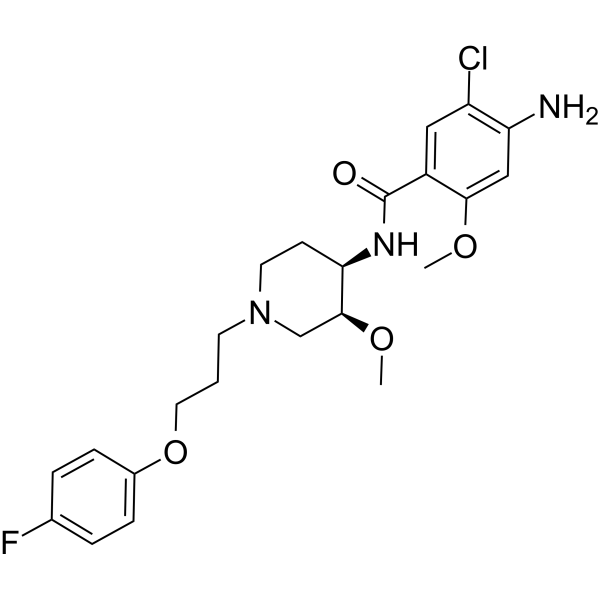 0 ImagesSynonyms: R 51619; (±)-CisapridCisapride (R 51619) is an orally active, selective 5-HT4 receptor agonist with an EC50 of 140 nM. Cisapride also acts as an hERG potassium channel blocker with an IC50 of 9.4 nM. Cisapride exerts gastrointestinal prokinetic effects by activating 5-HT4 receptors, but it also blocks the hERG potassium channel responsible for the repolarization phase of cardiac action potentials, delaying repolarization and thus prolonging the action potential duration. Cisapride can be used in research related to gastrointestinal dysfunction, gastroesophageal reflux disease, functional dyspepsia, chronic gastritis, gastroparesis, ulcerative colitis and necrotizing enterocolitis.
-
GR125487 sulfamate
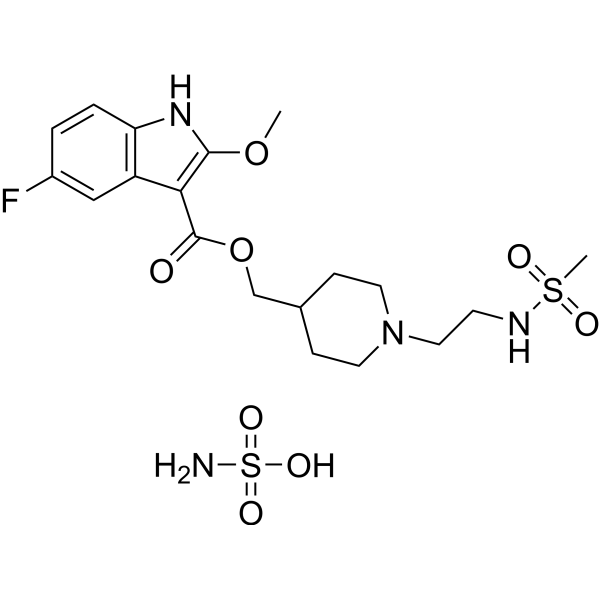 0 ImagesCat. No.: HY-103146CAS No.: 859502-43-5GR125487 is a highly selective 5-HT4 receptor antagonist and acts as an inverse agonist at constitutively active 5-HT4 (a) receptors. GR125487 inhibits adenylyl cyclase/cAMP signaling by blocking the Gs-coupled 5-HT4 receptor. GR125487 is used in research on 5-HT4 receptor function, neuropsychiatric disorders, and gastrointestinal motility.
-
PF-03382792
 0 ImagesPF-03382792 is a potent 5-HT4 partial agonist with a Ki of 2.7 nM and an EC50 of 0.9 nM for 5-HT4d. PF-03382792 can penetrate the brain. PF-03382792 produces moderate increases in cortical Ach in the rat prefrontal cortex.
-
Prucalopride hydrochloride
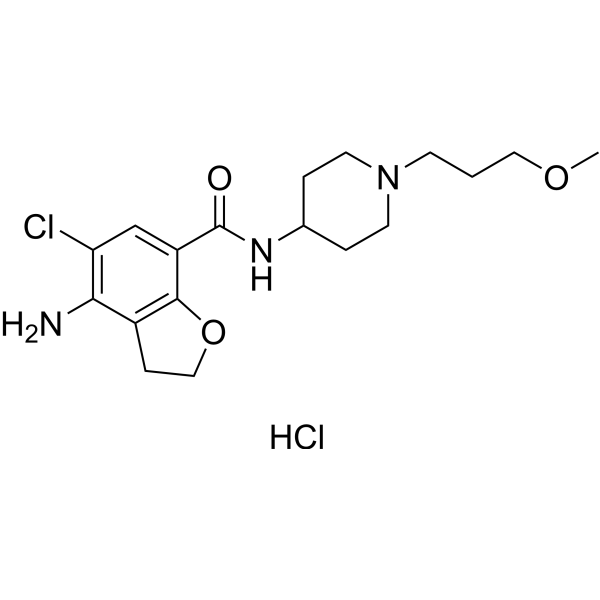 0 ImagesCat. No.: HY-14152CAS No.: 179474-80-7Prucalopride hydrochloride is an orally active, selective and specific 5-HT4 receptor agonist (high affinity), with pKis of 8.6 and 8.1 for human 5-HT4a/4b receptors, respectively. Prucalopride hydrochloride improves intestinal motility by promoting regeneration of the intestinal nervous system in rats. Prucalopride hydrochloride also shows anticancer activity by blocking of the PI3K/AKT/mTor signaling pathway. Prucalopride hydrochloride can be used in studies of chronic constipation, pseudo-intestinal obstruction and cancer.
-
Y-36912
 0 ImagesCat. No.: HY-108106CAS No.: 213600-06-7Y-36912 is an orally active, highly selective and affinity 5-HT4 receptor agonist (Ki = 1.5 nM). Y-36912 can accelerate gastric emptying and increase bowel frequency and stool weight. Y-36912 can be used for research on gastrointestinal conditions.
-
GR125487
 0 ImagesCat. No.: HY-W822786CAS No.: 144625-67-2GR125487 is a highly selective 5-HT4 receptor antagonist and acts as an inverse agonist at constitutively active 5-HT4 (a) receptors. GR125487 inhibits adenylyl cyclase/cAMP signaling by blocking the Gs-coupled 5-HT4 receptor. GR125487 is used in research on 5-HT4 receptor function, neuropsychiatric disorders, and gastrointestinal motility.
-
Lirexapride
 0 ImagesCat. No.: HY-105524CAS No.: 145414-12-6Lirexapride is a 5-HT4/Dopamine D2 receptor agonist. Lirexapride stimulants gastrointestinal motor. Lirexapride can be used for research on digestive system disorders.
-
Cisapride-13C,d3
 0 ImagesCat. No.: HY-W777120CAS No.: 1285970-69-5Synonyms: R 51619-13C,d3; (±)-Cisaprid-13C,d3Cisapride-13C,d3 (R 51619-13C,d3) is the deuterated, 13C-labeled Cisapride (HY-14149). Cisapride (R 51619) is an orally active, selective 5-HT4 receptor agonist with an EC50 of 140 nM. Cisapride also acts as an hERG potassium channel blocker with an IC50 of 9.4 nM. Cisapride exerts gastrointestinal prokinetic effects by activating 5-HT4 receptors, but it also blocks the hERG potassium channel responsible for the repolarization phase of cardiac action potentials, delaying repolarization and thus prolonging the action potential duration. Cisapride can be used in research related to gastrointestinal dysfunction, gastroesophageal reflux disease, functional dyspepsia, chronic gastritis, gastroparesis, ulcerative colitis and necrotizing enterocolitis.
-
CSP-2503
 0 ImagesCat. No.: HY-180372CAS No.: 581813-10-7CSP-2503 is a potent and selective 5-HT1A receptor agonist , with an EC50 of 0.15 μM and a Ki of 4.1 nM. CSP-2503 exhibits excellent selectivity over α1-adrenoceptors (Ki > 1000 nM), 5-HT4 receptors, and benzodiazepine receptors. CSP-2503 inhibits cAMP increase in vitro and exhibits anxiolytic activity in vivo. CSP-2503 can be used for the research of anxiety-related disorders.
-
SC-53606
 0 ImagesCat. No.: HY-120053CAS No.: 151898-33-8SC-53606 is a potent and selective 5-HT4 receptor antagonist, with a pA2 value of 8.13. SC-53606 acts as an antagonist of 5-HT4 receptor-mediated relaxation of Carbachol (HY-B1208)-induced contractions.
-
Capeserod hydrochloride
 0 ImagesCat. No.: HY-121249CAS No.: 191023-43-5Synonyms: SL65.0155Capeserod hydrochloride (SL65.0155) is a 5-HT4(e) receptor partial agonist (Ki=0.6 nM) with potent cognitive enhancing properties. Capeserod hydrochloride acts as a partial agonist in cells expressing 5-HT4(b) and 5-HT4(e) splice variants, stimulating cAMP production with IC50 values of 244 and 29 nM, respectively. Capeserod hydrochloride is used in the study of memory impairment and dementia.
-
Cisapride-d6
 0 ImagesCat. No.: HY-14149SCAS No.: 2738376-71-9Synonyms: R51619-d6; (±)-Cisaprid-d6Cisapride-d6 (R51619-d6) is the deuterated-labeled Cisapride (HY-14149). Cisapride (R 51619) is an orally active, selective 5-HT4 receptor agonist with an EC50 of 140 nM. Cisapride also acts as an hERG potassium channel blocker with an IC50 of 9.4 nM. Cisapride exerts gastrointestinal prokinetic effects by activating 5-HT4 receptors, but it also blocks the hERG potassium channel responsible for the repolarization phase of cardiac action potentials, delaying repolarization and thus prolonging the action potential duration. Cisapride can be used in research related to gastrointestinal dysfunction, gastroesophageal reflux disease, functional dyspepsia, chronic gastritis, gastroparesis, ulcerative colitis and necrotizing enterocolitis.
-
TKS 159
 0 ImagesCat. No.: HY-108173CAS No.: 142228-17-9TKS 159 is a 5-HT4 receptor agonist. TKS 159 can promote gastrointestinal motility. TKS 159 can be used for research on gastrointestinal conditions.
-
SB-203186
 0 ImagesCat. No.: HY-135439CAS No.: 135938-17-9SB-203186 is a highly selective 5-HT4 receptor antagonist. SB-203186 exhibits a potent competitive antagonistic effect, with its pKB value being 8.3 in the isolated right atrium model of piglets. SB-203186 can dose-dependently shift the 5-HT-induced tachycardia curve to the right, and does not inhibit the maximum response. SB-203186 is an efficient 5-HT₄ antagonist in pig and human atria, but has no significant inhibitory effect in rat atria. SB-203186 can be used for the study of diseases such as arrhythmias and abnormal myocardial contraction.
-
Minesapride hydrobromide
 0 ImagesCat. No.: HY-109065ACAS No.: 1184661-33-3Synonyms: DSP-6952 hydrobromideMinesapride hydrobromide (DSP-6952 hydrobromide) is an orally active, selective 5-HT4 receptor partial agonist. Minesapride hydrobromide enhances gastrointestinal motility, colonic transit and defecation function, and inhibits visceral hypersensitivity. Minesapride hydrobromide does not inhibit/induce cytochrome P450 isozymes, has no significant affinity for hERG, and does not trigger the risk of cardiac ischemia via coronary vasoconstriction. Minesapride hydrobromide can be used in research related to constipation-predominant irritable bowel syndrome, chronic constipation, atonic constipation, spastic constipation, functional constipation and functional dyspepsia.
-
Minesapride
 0 ImagesCat. No.: HY-109065CAS No.: 1184662-54-1Synonyms: DSP-6952 free baseMinesapride (DSP-6952 free base) is an orally active, selective 5-HT4 receptor partial agonist. Minesapride enhances gastrointestinal motility, colonic transit and defecation function, and inhibits visceral hypersensitivity. Minesapride does not inhibit/induce cytochrome P450 isozymes, has no significant affinity for hERG, and does not trigger the risk of cardiac ischemia via coronary vasoconstriction. Minesapride can be used in research related to constipation-predominant irritable bowel syndrome, chronic constipation, atonic constipation, spastic constipation, functional constipation and functional dyspepsia.
-
RS-23597
 0 ImagesCat. No.: HY-145457CAS No.: 172679-58-2RS-23597 is a 5-HT4R antagonist with a Ki value of 19 nM against guinea pig 5-HT4R. RS-23597 inhibits the relaxation of the esophageal muscularis mucosae in rats. RS-23597 regulates 5-HT4R-Gs protein coupling and triggers the Gs-mediated cAMP signaling pathway. RS-23597 is applicable to the research of neurological diseases.
-
Cisapride (Standard)
 0 ImagesSynonyms: R 51619 (Standard); (±)-Cisaprid (Standard)Cisapride (R 51619) (Standard) is the analytical standard of Cisapride (HY-14149). This product is intended for research and analytical applications. Cisapride (R 51619) is an orally active, selective 5-HT4 receptor agonist with an EC50 of 140 nM. Cisapride also acts as an hERG potassium channel blocker with an IC50 of 9.4 nM. Cisapride exerts gastrointestinal prokinetic effects by activating 5-HT4 receptors, but it also blocks the hERG potassium channel responsible for the repolarization phase of cardiac action potentials, delaying repolarization and thus prolonging the action potential duration. Cisapride can be used in research related to gastrointestinal dysfunction, gastroesophageal reflux disease, functional dyspepsia, chronic gastritis, gastroparesis, ulcerative colitis and necrotizing enterocolitis.
-
5-HT4R agonist-3
 0 ImagesCat. No.: HY-184052CAS No.: 1809612-31-45-HT4R agonist-3 is a 5-HT4R agonist with an EC50 of 22 nM. 5-HT4R agonist-3 selectively modulates 5-HT4R and induces pro-cognitive activity. 5-HT4R agonist-3 can be used in research related to Alzheimer's disease.
- 1



